Key Takeaways:
- Telemedicine is becoming essential for modern healthcare in 2026.
- Video consultations, secure chat, and appointment scheduling are must-have features.
- AI and wearable integration are improving patient care and monitoring.
- HIPAA and GDPR compliance are critical for data security and trust.
- Development cost depends on features, scalability, and platform complexity.
The healthcare landscape is undergoing a massive digital transformation, and telemedicine is no longer a “nice-to-have” it has become a necessity. As we step into 2026, telemedicine apps are redefining how healthcare is accessed, delivered, and experienced. For healthcare startups, hospitals, and entrepreneurs, building a telemedicine platform is not just an opportunity it’s a strategic move to stay relevant in a rapidly evolving ecosystem.
We specialize in building scalable, compliant, and user-centric telemedicine solutions that bridge the gap between patients and providers. This comprehensive guide will walk you through everything you need to know from features and compliance to cost and decision-making.
Why 2026 Is the Breakout Year for Telemedicine Apps
The momentum behind telemedicine has been building steadily over the past few years, but 2026 is shaping up to be the year where adoption reaches a critical tipping point. Several factors are contributing to this acceleration, including technological advancements, changing patient behavior, and increasing pressure on healthcare systems.
Patients today expect convenience similar to what they experience in e-commerce or food delivery apps. Waiting in long queues for basic consultations is becoming unacceptable, especially when virtual care can solve the same problem in minutes. On the provider side, doctors are increasingly adopting digital tools to manage their workload more efficiently and reach patients beyond geographical boundaries.
Another major driver is the integration of AI and wearable technology, which allows telemedicine apps to go beyond consultations and become continuous health monitoring platforms. Governments and regulatory bodies are also introducing clearer frameworks, making it easier for businesses to enter the space with confidence.
In simple terms, 2026 is not just about telemedicine growth it’s about telemedicine maturity.
The $455 Billion Telehealth Market Opportunity and the Physician Shortage Driving It
The global telehealth market is projected to surpass $455 billion, making it one of the fastest-growing sectors in digital health. This explosive growth is not accidental; it is driven by a fundamental mismatch between healthcare demand and supply.
There is a significant shortage of physicians worldwide, especially in rural and semi-urban areas. In India alone, the doctor-to-patient ratio remains below WHO recommendations, creating a massive accessibility gap. Telemedicine apps act as a force multiplier, enabling a single doctor to consult multiple patients across locations without physical constraints.
Consider a real-life scenario: a patient in a Tier-3 city experiencing early symptoms of a chronic condition. Instead of traveling hundreds of kilometers to consult a specialist, they can connect instantly through a telemedicine app, receive guidance, and even get prescriptions delivered to their doorstep. This not only saves time and money but also improves health outcomes through early intervention.
Additionally, healthcare costs are rising globally. Telemedicine reduces overhead costs for hospitals while offering affordable care options for patients, creating a win-win situation for all stakeholders.
Synchronous, Asynchronous, and Remote Patient Monitoring: The Three Modalities
Telemedicine is not a one-size-fits-all solution. It operates through three primary modalities, each serving different use cases and patient needs.
Synchronous telemedicine refers to real-time interactions between doctors and patients, typically through video or voice calls. This is the most common form and closely resembles traditional consultations, making it ideal for general checkups and follow-ups.
Asynchronous telemedicine, also known as “store-and-forward,” allows patients to upload medical data such as reports, images, or symptoms, which doctors review later. This model is highly efficient for non-urgent consultations and reduces wait times significantly.
Remote Patient Monitoring (RPM) takes telemedicine to the next level by continuously tracking patient health data through connected devices like smartwatches, glucose monitors, and heart rate sensors. Doctors can monitor patients in real time and intervene proactively when abnormalities are detected.
These three modalities together create a comprehensive digital healthcare ecosystem that is flexible, scalable, and patient-centric.
Core Features Every Telemedicine App Must Have
A successful telemedicine app is built on a strong foundation of essential features that ensure seamless communication, data security, and user convenience.
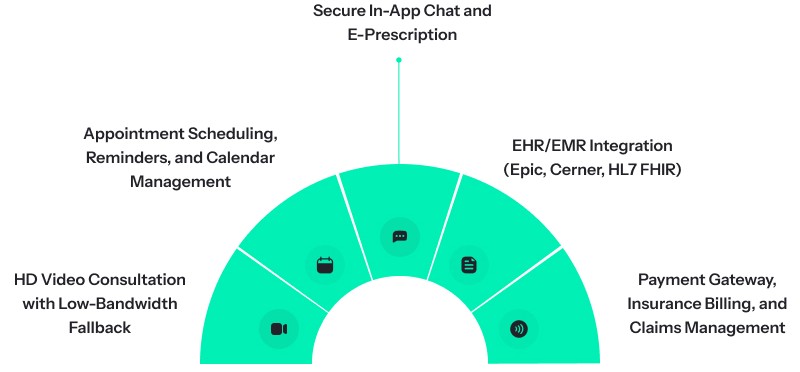
HD Video Consultation with Low-Bandwidth Fallback
High-quality video consultation is the backbone of any telemedicine app. However, not all users have access to high-speed internet, especially in rural areas. A robust app must support HD video while also offering low-bandwidth fallback options such as adaptive streaming or switching to audio mode.
This ensures uninterrupted consultations regardless of network conditions, which is critical for user trust and retention.
Appointment Scheduling, Reminders, and Calendar Management
Efficient scheduling is essential to manage doctor availability and patient appointments. Features like real-time slot booking, automated reminders, and calendar synchronization reduce no-shows and improve operational efficiency.
For example, automated SMS or push notifications can remind patients about upcoming consultations, significantly improving attendance rates.
Secure In-App Chat and E-Prescription
Secure messaging allows patients to communicate with doctors beyond consultations, enabling follow-ups and quick clarifications. E-prescriptions further enhance convenience by allowing doctors to digitally generate and share prescriptions, which can be directly integrated with pharmacies.
This creates a seamless end-to-end healthcare experience within a single platform.
EHR/EMR Integration (Epic, Cerner, HL7 FHIR)
Integration with Electronic Health Records (EHR) and Electronic Medical Records (EMR) systems ensures that patient data is centralized and easily accessible. Standards like HL7 FHIR enable interoperability between different healthcare systems.
This is particularly important for hospitals and large healthcare providers that rely on existing infrastructure.
Payment Gateway, Insurance Billing, and Claims Management
A telemedicine app must support multiple payment options, including credit/debit cards, UPI, and digital wallets. Additionally, integrating insurance billing and claims management simplifies the reimbursement process for patients.
This not only enhances user experience but also increases revenue opportunities for providers.
Advanced Features That Differentiate Top Telemedicine Platforms
While core features are essential, advanced capabilities are what set top-tier telemedicine apps apart from the competition.
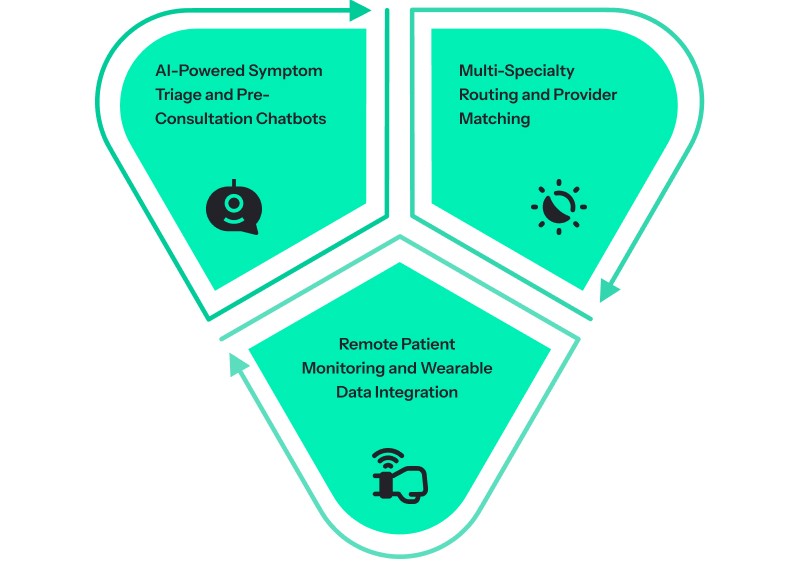
AI-Powered Symptom Triage and Pre-Consultation Chatbots
AI-driven chatbots can analyze symptoms and guide patients to the appropriate specialist before the consultation begins. This reduces consultation time and ensures that patients receive accurate care faster.
For instance, a chatbot can ask a series of structured questions and suggest whether a patient should consult a general physician, dermatologist, or cardiologist.
Remote Patient Monitoring and Wearable Data Integration
Integrating wearable devices allows continuous health tracking, enabling proactive care. Data such as heart rate, sleep patterns, and activity levels can be analyzed to detect early warning signs.
This is particularly useful for managing chronic conditions like diabetes and hypertension.
Multi-Specialty Routing and Provider Matching
Advanced routing algorithms can match patients with the most suitable healthcare provider based on symptoms, location, availability, and specialization.
This improves patient satisfaction and ensures better health outcomes.
Compliance: What Your Telemedicine App Must Meet in 2026
Compliance is not optional in healthcare it is a critical requirement that directly impacts user trust and legal viability.
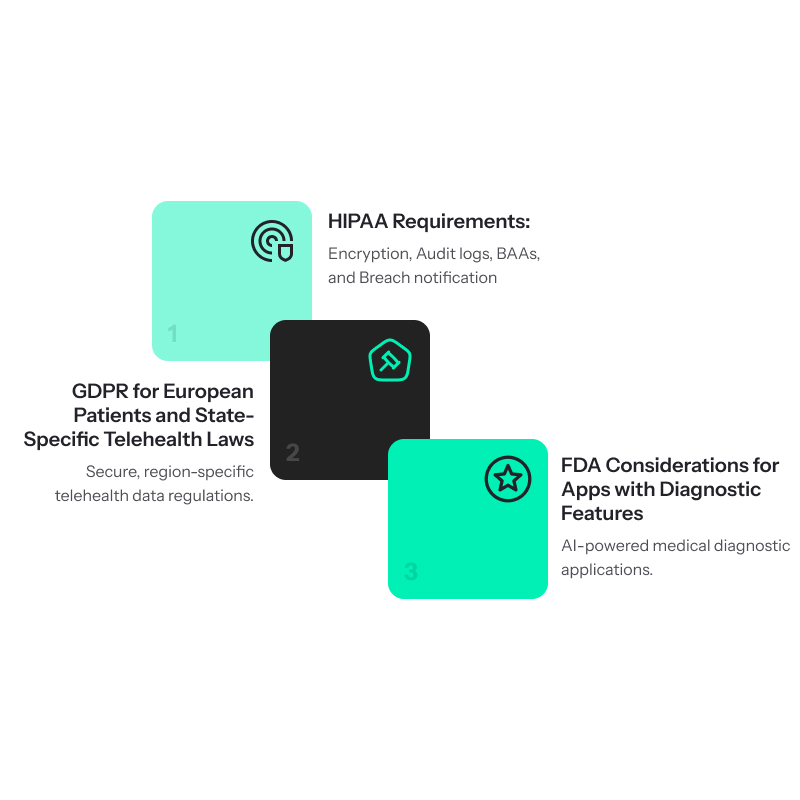
HIPAA Requirements: Encryption, Audit Logs, BAAs, and Breach Notification
For apps targeting the US market, HIPAA compliance is mandatory. This includes end-to-end encryption, detailed audit logs, Business Associate Agreements (BAAs), and robust breach notification protocols.
Failure to comply can result in heavy penalties and reputational damage.
GDPR for European Patients and State-Specific Telehealth Laws
If your app serves European users, GDPR compliance is essential. This involves strict data privacy measures, user consent management, and data portability.
Additionally, telehealth laws vary by region, making it important to stay updated with local regulations.
FDA Considerations for Apps with Diagnostic Features
Apps that offer diagnostic capabilities may fall under FDA regulations. This includes AI-based tools that provide medical recommendations.
Ensuring compliance with these guidelines is crucial to avoid legal complications.
Tech Stack for a Scalable Telemedicine Platform
Choosing the right technology stack is key to building a scalable and reliable telemedicine app.
WebRTC for Video, Microservices for Scalability, AWS/Azure for Cloud
WebRTC enables real-time video and audio communication, making it ideal for telemedicine apps. A microservices architecture ensures scalability and flexibility, allowing different components to be developed and deployed independently.
Cloud platforms like AWS and Azure provide robust infrastructure, ensuring high availability, security, and performance.
Telemedicine App Development Cost Breakdown in 2026
The cost of developing a telemedicine app varies depending on features, complexity, and scale.
Cost Breakdown Table
|
Tier
|
Features Included
|
Estimated Cost
|
|
MVP Tier
|
Basic consultation, chat, scheduling
|
$60,000 – $100,000
|
|
Mid-Tier
|
Multi-platform, EHR integration
|
$100,000 – $200,000
|
|
Enterprise Tier
|
AI, RPM, full compliance
|
$200,000 – $350,000+
|
MVP Tier ($60k–$100k): Core Features and Single Platform
An MVP focuses on essential features and is ideal for startups looking to validate their idea quickly. It typically includes video consultation, chat, and basic scheduling.
Mid-Tier ($100k–$200k): Multi-Platform and EHR Integration
This level includes cross-platform compatibility and integration with existing healthcare systems, making it suitable for growing businesses.
Enterprise Tier ($200k–$350k+): AI Features and Full Compliance Stack
Enterprise solutions offer advanced features like AI, RPM, and full compliance, catering to large healthcare providers and hospitals.
Hidden Costs: Ongoing Compliance, Maintenance (15–20% Annually), and Cloud
Beyond development, there are ongoing costs that must be considered.
|
Cost Component
|
Description
|
Estimated Impact
|
|
Maintenance
|
Regular updates and bug fixes
|
15–20% annually
|
|
Compliance
|
Audits and certifications
|
High
|
|
Cloud Infrastructure
|
Hosting and storage
|
Variable
|
Custom Build vs. White-Label Telemedicine Platform: Which Is Right for You?
Choosing between a custom-built solution and a white-label platform depends on your business goals, budget, and timeline.
A custom build offers complete control, scalability, and unique features tailored to your requirements. However, it requires higher investment and longer development time.
White-label solutions, on the other hand, are faster to deploy and cost-effective but come with limitations in customization and scalability.
For startups looking to differentiate themselves, a custom-built solution is often the better choice.
How to Choose the Right Telemedicine App Development Company
Selecting the right development partner is crucial for the success of your telemedicine app.
Look for a company with proven experience in healthcare app development, strong technical expertise, and a deep understanding of compliance requirements. Evaluate their portfolio, client testimonials, and ability to deliver scalable solutions.
We combine domain expertise with cutting-edge technology to deliver telemedicine apps that are secure, scalable, and future-ready.
Conclusion
Telemedicine is no longer the future it is the present. As healthcare continues to evolve, telemedicine apps will play a central role in improving accessibility, efficiency, and patient outcomes.
From understanding market opportunities and core features to navigating compliance and cost, building a telemedicine app requires careful planning and execution. With the right strategy and development partner, you can create a platform that not only meets current demands but also adapts to future advancements.
If you’re ready to build a telemedicine solution that stands out in 2026, we are here to help you turn your vision into reality.
FAQs
How much does it cost to build a telemedicine app in 2026?
The cost ranges from $60,000 for an MVP to over $350,000 for an enterprise-level solution, depending on features, complexity, and compliance requirements.
How long does it take to develop a telemedicine app?
Development timelines typically range from 3 to 9 months, depending on the scope and level of customization.
Can I use Zoom for my telemedicine app?
While Zoom can be integrated for video consultations, it may not meet all compliance requirements, making custom solutions a better option for healthcare applications.
What is the highest hidden cost in telemedicine app development?
Ongoing compliance and maintenance costs are often underestimated but can significantly impact long-term budgets.
What is EHR integration and why is it essential for telehealth?
EHR integration allows seamless access to patient data, improving diagnosis accuracy and treatment efficiency.
What regulations apply to telemedicine apps in India?
In India, telemedicine apps must comply with guidelines issued by the Medical Council of India and data protection laws, ensuring secure and ethical healthcare delivery.

 TechQware