In today’s hyper-competitive, digitally accelerated business landscape, retail and logistics companies are under constant pressure to improve efficiency, reduce operational costs, and deliver seamless customer experiences. The traditional ways of managing inventory, deliveries, and workforce coordination are no longer sufficient. Businesses now require intelligent, scalable, and real-time solutions and that’s where custom Android applications step in as a game-changing investment.
This comprehensive guide is designed specifically for decision-makers who are evaluating whether to build a custom Android app for their retail or logistics business. From understanding why Android dominates enterprise operations to evaluating costs, integrations, and development partners, this blog walks you through every critical aspect helping you make a confident and informed decision.
Why Android Is the Enterprise Platform of Choice for Field Operations
Android has steadily evolved from being just a consumer mobile operating system into a robust enterprise-grade platform powering millions of field operations worldwide. Its open ecosystem, hardware flexibility, and deep customization capabilities make it the preferred choice for businesses operating in dynamic environments like warehouses, retail floors, and logistics fleets.
Unlike closed ecosystems, Android allows enterprises to build applications tailored exactly to their operational workflows. Whether it’s integrating with legacy ERP systems, enabling offline functionality, or deploying apps across rugged devices, Android provides unmatched adaptability.
Field operations often involve unpredictable environments limited connectivity, physical handling, and real-time decision-making. Android’s flexibility ensures that businesses can design apps that function seamlessly even under these constraints. From delivery agents capturing proof-of-delivery to warehouse staff scanning barcodes in low-light conditions, Android supports it all.
Moreover, Android’s compatibility with enterprise mobility management solutions ensures centralized control, enhanced security, and easy deployment at scale. For businesses aiming to digitize operations while maintaining control, Android is not just a choice it’s a strategic advantage.
Android’s 71% Global Market Share and What It Means for B2B
Android’s global market share of approximately 71% is not just a statistic it is a powerful indicator of its dominance and reliability. For B2B businesses, this translates into a massive ecosystem of devices, developers, and support infrastructure.
This widespread adoption means that businesses are not locked into a single vendor or device type. Instead, they can choose from a wide range of smartphones, tablets, and rugged devices that suit their operational needs and budgets. This flexibility significantly reduces procurement costs and allows businesses to scale efficiently.
From a workforce perspective, employees are already familiar with Android interfaces, reducing training time and improving adoption rates. For example, a delivery company onboarding 500 new drivers can deploy an Android-based app with minimal training requirements, ensuring faster rollout and productivity gains.
Additionally, the large developer community ensures continuous innovation, faster development cycles, and access to cutting-edge technologies like AI, IoT, and real-time analytics.
Rugged Android Devices in Warehouses, Delivery Fleets, and Retail Floors
In demanding environments like warehouses and logistics operations, standard consumer devices often fall short. This is where rugged Android devices come into play. Designed to withstand harsh conditions such as dust, moisture, drops, and extreme temperatures, these devices are built for durability and reliability.
Warehouses use rugged handheld devices for barcode scanning, inventory tracking, and order fulfillment. Delivery fleets rely on them for navigation, route optimization, and real-time updates. Retail floors utilize them for assisted selling, inventory checks, and mobile POS systems.
A real-life example can be seen in large e-commerce warehouses where workers use rugged Android scanners to process thousands of orders daily. These devices not only improve efficiency but also reduce errors, ensuring accurate inventory management.
The ability to integrate these devices with custom Android apps further enhances their value, enabling businesses to create a seamless and efficient operational ecosystem.
Use Cases: How Retail and Logistics Businesses Are Using Custom Android Apps
Custom Android apps are transforming how retail and logistics businesses operate by addressing specific challenges and optimizing workflows. These applications are not generic they are purpose-built to solve real business problems.
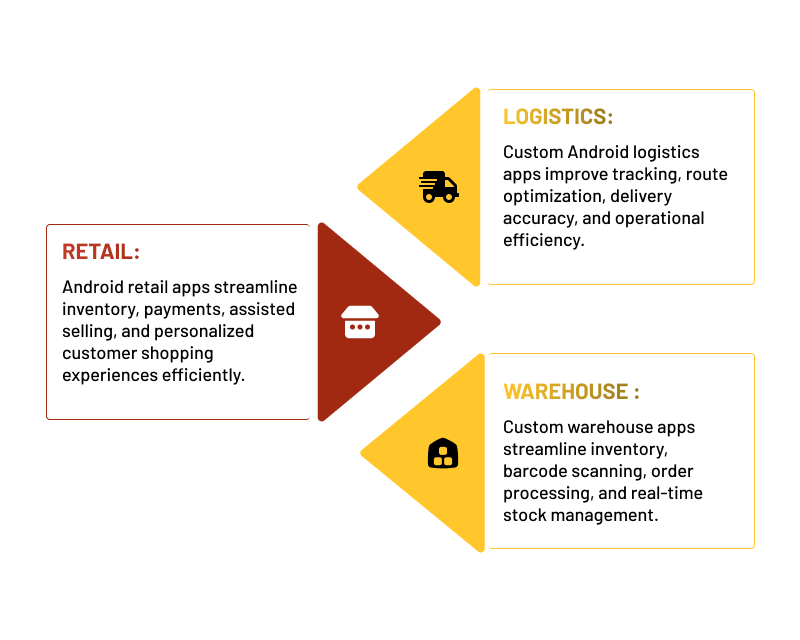
Retail: Inventory Management, POS, and Assisted Selling Apps
Retail businesses are leveraging Android apps to streamline inventory management, enhance customer engagement, and improve sales efficiency. Inventory management apps provide real-time visibility into stock levels, reducing instances of overstocking or stockouts.
Mobile POS systems enable sales associates to complete transactions anywhere on the store floor, reducing queues and improving customer satisfaction. Assisted selling apps empower staff with product information, recommendations, and customer data, enabling personalized shopping experiences.
For example, a fashion retail chain can equip its staff with tablets running a custom Android app that shows product availability across stores, suggests complementary items, and processes payments instantly.
Logistics: Delivery Tracking, Route Optimization, and Proof-of-Delivery Apps
In logistics, efficiency and accuracy are critical. Custom Android apps enable real-time delivery tracking, allowing businesses and customers to monitor shipments at every stage.
Route optimization features use GPS and AI algorithms to determine the most efficient delivery paths, reducing fuel costs and delivery times. Proof-of-delivery apps allow drivers to capture signatures, photos, and timestamps, ensuring accountability and transparency.
A courier company, for instance, can reduce delivery delays by 20% by implementing route optimization and real-time tracking features in its Android app.
Warehouse Management: Barcode Scanning, Pick-Pack-Ship, and Real-Time Stock
Warehouse operations are complex and require precise coordination. Custom Android apps simplify these processes by enabling barcode scanning, automating pick-pack-ship workflows, and providing real-time stock updates.
Workers can scan items, verify orders, and update inventory instantly, reducing manual errors and improving efficiency. Real-time stock visibility ensures better planning and faster order fulfillment.
Build vs. Buy: Should You Go Custom or Use an Off-the-Shelf Solution?
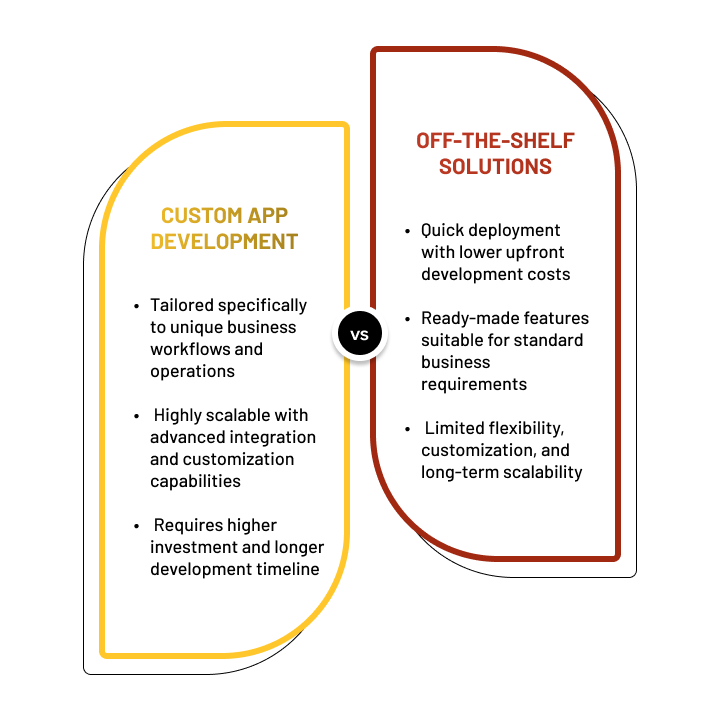
One of the most critical decisions for businesses is whether to build a custom app or use an off-the-shelf solution. While SaaS products offer quick deployment, they often lack the flexibility required for complex operations.
Custom apps, on the other hand, are designed to meet specific business requirements, offering greater control, scalability, and integration capabilities. However, they require a higher initial investment and longer development time.
When a Custom Android App Makes Better Business Sense
A custom Android app is the right choice when your business processes are unique, complex, or require deep integration with existing systems. If off-the-shelf solutions fail to address your needs or require significant workarounds, custom development becomes a more viable option.
For example, a logistics company with specialized delivery workflows may find it difficult to adapt a generic SaaS solution. A custom app allows them to build features tailored to their operations, resulting in improved efficiency and ROI.
Total Cost of Ownership: Custom vs. SaaS Over 3 Years
Understanding the total cost of ownership (TCO) is crucial when evaluating your options. While SaaS solutions may seem cost-effective initially, recurring subscription fees can add up over time.
|
Cost Component
|
Custom Android App (3 Years)
|
SaaS Solution (3 Years)
|
|
Initial Development
|
High
|
Low
|
|
Subscription Fees
|
None
|
High
|
|
Customization Costs
|
Included
|
Additional
|
|
Integration Costs
|
Moderate
|
High
|
|
Scalability Costs
|
Low
|
High
|
|
Total Cost
|
Moderate
|
High
|
Over a three-year period, custom apps often prove to be more cost-effective, especially for growing businesses.
Android Enterprise: Managing a Fleet of Business Devices
Android Enterprise is a comprehensive solution designed to help businesses manage and secure Android devices at scale. It provides tools for device enrollment, app management, and security enforcement.
With Android Enterprise, businesses can control how devices are used, restrict unauthorized apps, and ensure data security. This is particularly important for logistics and retail operations where devices handle sensitive information.
Android Enterprise Recommended Devices and What to Look For
Android Enterprise Recommended devices meet strict criteria for performance, security, and manageability. Businesses should look for devices with long battery life, rugged design, regular security updates, and compatibility with enterprise mobility solutions.
Choosing the right devices ensures reliability and reduces maintenance costs, making it a critical factor in successful deployment.
Kiosk Mode, MDM Enrollment, and Zero-Touch Provisioning
Kiosk mode allows businesses to lock devices to a single application or a set of approved apps, preventing misuse and ensuring focus on work-related tasks. Mobile Device Management (MDM) enables centralized control of devices, including app installation, updates, and security policies.
Zero-touch provisioning simplifies device setup by allowing IT teams to configure devices remotely before they are even turned on. This is particularly useful for large-scale deployments.
Must-Have Features for Retail and Logistics Android Apps
A successful Android app for retail or logistics must include features that address operational challenges and improve efficiency.
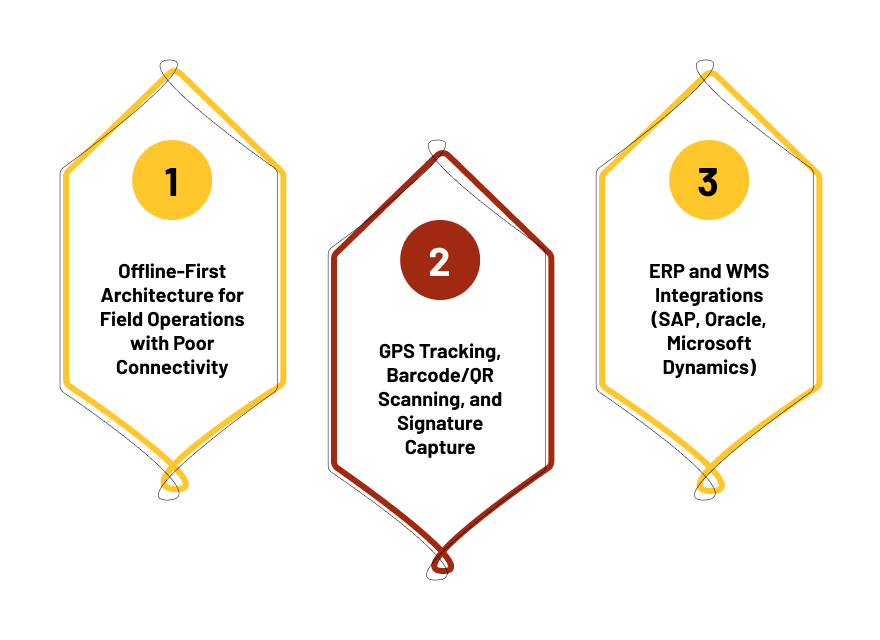
Offline-First Architecture for Field Operations with Poor Connectivity
In many field operations, internet connectivity is unreliable. An offline-first architecture ensures that the app continues to function even without a network connection. Data is stored locally and synchronized once connectivity is restored.
This feature is critical for delivery agents operating in remote areas or warehouse workers in signal-restricted zones.
GPS Tracking, Barcode/QR Scanning, and Signature Capture
GPS tracking enables real-time location monitoring, improving visibility and accountability. Barcode and QR scanning streamline inventory management, while signature capture ensures proof of delivery.
These features not only enhance efficiency but also improve customer trust and satisfaction.
ERP and WMS Integrations (SAP, Oracle, Microsoft Dynamics)
Integration with enterprise systems like SAP ERP, Oracle ERP, and Microsoft Dynamics 365 is essential for seamless data flow and operational efficiency.
These integrations enable real-time updates, better decision-making, and improved coordination across departments.
Development Cost and Timeline: What to Budget in 2026
The cost of developing a custom Android app depends on various factors, including complexity, features, integrations, and development team location.
|
App Complexity
|
Estimated Cost (USD)
|
Timeline
|
|
Basic App
|
$15,000 – $30,000
|
2–3 Months
|
|
Medium Complexity
|
$30,000 – $80,000
|
3–6 Months
|
|
Advanced Enterprise
|
$80,000 – $200,000+
|
6–12 Months
|
In 2026, businesses should also budget for ongoing maintenance, updates, and scalability enhancements.
How to Evaluate and Choose an Android App Development Partner
Choosing the right development partner is crucial for the success of your project. Businesses should evaluate partners based on their experience, technical expertise, portfolio, and understanding of industry-specific requirements.
A reliable partner will not only build your app but also provide strategic guidance, ensuring alignment with your business goals. Look for companies that offer end-to-end services, from ideation and design to development and maintenance.
Conclusion
Building a custom Android app for your retail or logistics business is not just a technological upgrade it is a strategic investment that can transform your operations, improve efficiency, and drive growth. From enabling real-time visibility to optimizing workflows and enhancing customer experiences, the benefits are substantial.
While the decision to build a custom app requires careful consideration of costs, timelines, and requirements, the long-term advantages often outweigh the initial investment. With the right strategy and development partner, businesses can unlock new levels of efficiency and competitiveness.
At TechQware Technologies, we specialize in delivering tailored Android app development solutions designed to meet the unique needs of retail and logistics businesses. Our expertise in enterprise mobility, system integrations, and scalable architectures ensures that your app not only meets today’s requirements but is also future-ready.
If you are ready to transform your operations and stay ahead in a competitive market, now is the time to invest in a custom Android solution.
FAQs
How much does it cost to build a custom Android app for a business?
The cost varies based on complexity, features, and integrations, typically ranging from $15,000 to over $200,000 for enterprise-grade applications.
What is Android Enterprise and how does it work?
Android Enterprise is a platform that enables businesses to manage and secure Android devices through centralized tools and policies.
What is kiosk mode on Android and when should you use it?
Kiosk mode restricts device usage to specific apps, making it ideal for retail kiosks, warehouse devices, and delivery operations.
Can Android apps work offline in warehouses and remote areas?
Yes, with offline-first architecture, Android apps can function without internet connectivity and sync data later.
How do I integrate an Android app with SAP or an ERP system?
Integration is achieved through APIs, middleware, and secure data exchange protocols, ensuring seamless communication between systems.
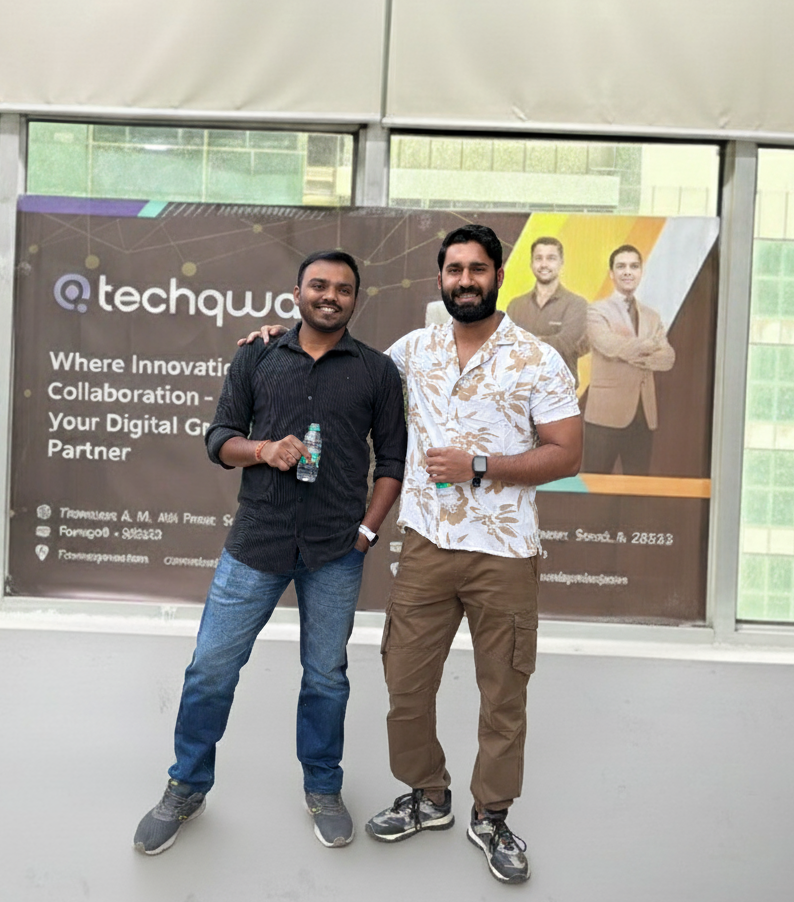
TechQware’s Android App Development Team
About Author
TechQware delivers high-performance Android App Development using Kotlin and Java, supported by Python-powered backends, RESTful APIs, and Firebase for real-time functionality. We focus on scalability, speed, and user engagement to help businesses grow.

.png)