Introduction
The social media ecosystem is experiencing a seismic change. As we approach the year 2026, a cocktail of technologies, user expectations, and business models are reconceiving how platforms are constructed and operate. This blog highlights the features, emerging technologies, and development approaches that will deliver users a successful social media application in 2026.
1. Why the Social Media Space Is More Competitive Than Ever
The global social media market is expected to surpass USD 310.37 billion by 2030, an indication of its vast influence and competitiveness.
Social media platforms have evolved beyond channels for communication to having commerce, resources for entertainment, and self-identity functions. Users are demanding improved personalization, immersive experiences, and security, which all call for new ideas and developments.
2. What Users Expect Now vs. What They Will Expect Soon
Present-Day Expectations:
- Personalization: Content feeds and recommendations should be tailored to the user.
- Interactivity: Features such as live streaming, comments, and reactions.
- Privacy: Users must have greater control over their personal data and content.
Expectations for the Near Future:
- Immersive Experiences: AR/VR capabilities for more engaging interaction.
- Decentralization: Platforms will have more user control over content and ownership of data.
- Intelligence-Driven Interactive: Move toward advanced AI for content creation, moderation, and personalization.
- Seamless Commerce: In-app shopping experiences and monetization options for creators.
User Control and Transparency of the Feed
Algorithmic Feeds: Current Status and Concerns
On traditional social media platforms, algorithmic feeds are a highly relied-upon mechanism that relies heavily on engagement metrics to rank content. Although algorithmic feeds incentivize user engagement, problems with views of engagement occur in the following ways.
- Filter Bubbles: Users are served content that further entrenches their views rather than exposing users to more versatile ideas or content.
- Content Trustworthiness: Algorithms often provide priority feeds of content like misleading, newsworthy or sensationalized content in a social tandem that serve for the goal of engagement.
Decentralized Feed Curation
New platforms are utilizing decentralized means to put user content back in control of curating the feed they see, by activating features such as:
- Rule-Based Systems: Users can set preferences and filters to curate their feed.
- Machine Learning (ML): Content that is personalized based on behavior and preferences.
Case studies:
- Mastodon: A decentralized social network that allows users to create and manage their own servers with more content and moderation control.
- Bluesky: A social media project pursuing to create an open, decentralized standard.
Enriching Content Production through Generative AI + AR/VR
Generative AI Functions
- Text/Video/Image Prompts: AI tools designed to support content creation by generating images, videos, or text based on simple prompts made by users.
- Automated Summarizing: Algorithms powered by AI can summarize many long-form pieces of content in a digestible fashion, in a less compact way.
AR Filters and Try-Ons
- AR Filters: Filters for augmented reality, that enhance photos/videos to create interactive and engaging pieces of content.
- AR Try-Ons: Virtual try-on experiences for clothing or makeup, 'trying-on' items for users before they purchase.
VR Spaces for Meet-ups/Events
- VR: Platforms are developing Virtual reality spaces, where users can meet, interact, and attend events in virtual (and sometimes augmented) environments.
Personalization & Engagement via Multiple Modalities
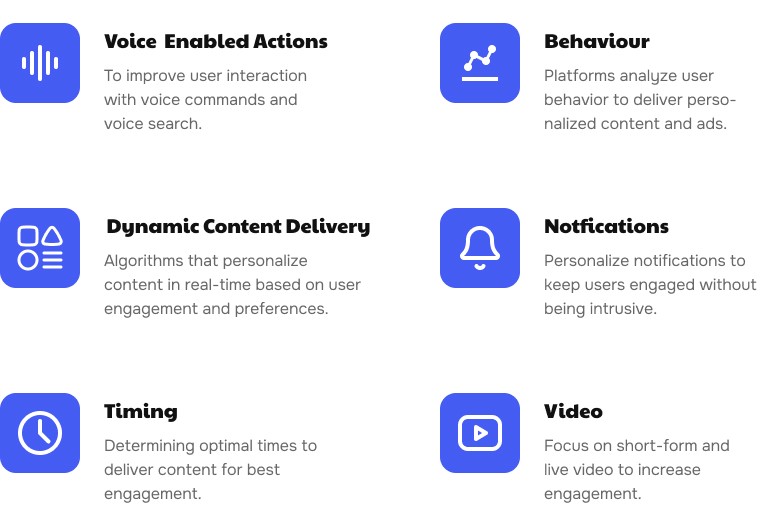
With Voice, Video, Behavior, and Preferences
- Voice-Enabled Actions: To improve user interaction with voice commands and voice search.
- Video: Focus on short-form and live video to increase engagement.
- Behavior: Platforms analyze user behavior to deliver personalized content and ads.
Real-Time Personalization
- Dynamic Content Delivery: Algorithms that personalize content in real-time based on user engagement and preferences.
- Timing: Determining optimal times to deliver content for best engagement.
- Notifications: Personalize notifications to keep users engaged without being intrusive.
Social Features that engage and have User Interaction in Real-Time
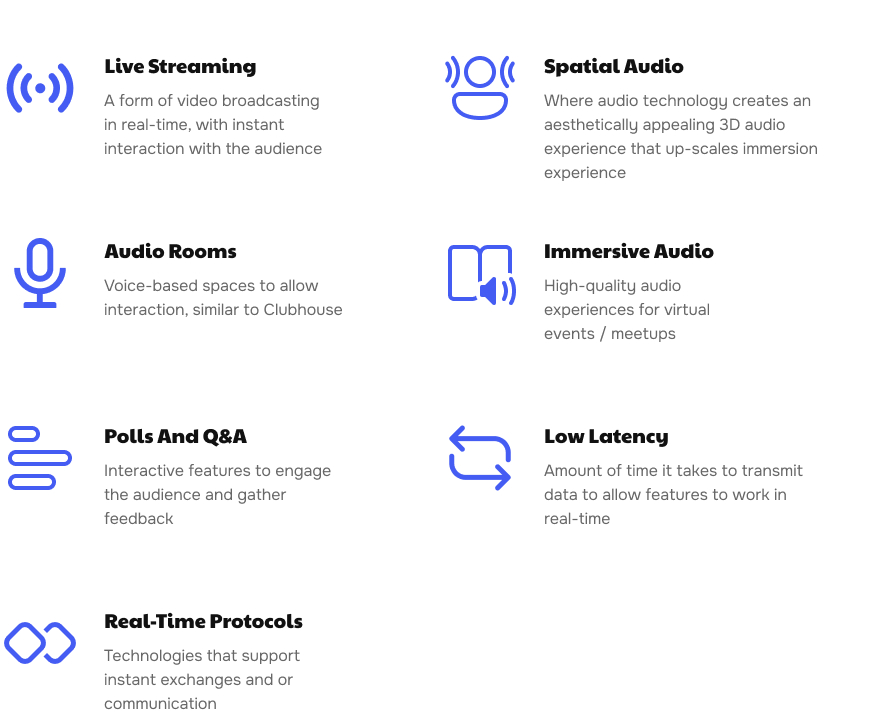
Live Streaming, Audio Rooms, Polls, Q&A
- Live Streaming: A form of video broadcasting in real-time, with instant interaction with the audience
- Audio Rooms: Voice-based spaces to allow interaction, similar to Clubhouse
- Polls and Q&A: Interactive features to engage the audience and gather feedback
Spatial Audio / Immersive Audio Experiences
- Spatial Audio: Where audio technology creates an aesthetically appealing 3D audio experience that up-scales immersion experience
- Immersive Audio: High-quality audio experiences for virtual events / meetups
Infrastructure Needed
- Low Latency: Timely amount of time it takes to transmit data to allow features to work in real-time
- Real-time protocols: Technologies that support instant exchanges and or communication
Social Commerce & Monetization Models
Shopping Within the Platform
- Integrated Shopping: Apps are adding shopping capabilities, allowing users to buy products from their social networks directly in the app.
Influencer/Creator Revenue Share
- Monetization Options: Creators can make money through ads, sponsored posts, and fan donations.
Live Shopping
- Live Shopping Events: Live product demonstrations and shopping events that attracts users and enhances buying experience.
Microtransactions, Premium Features
- In-App Purchases: Users can buy virtual goods, premium content, or premium features that enhance their experience.
Privacy, Security & Data Ownership
Decentralization, Blockchain for Identity/Data Integrity
- Blockchain Technology: Provides secure and transparent transactions allowing for greater user trust.
Privacy by Design
- User Control: Platforms are utilizing user-controlled features to manage their data and privacy settings.
Moderation Tools & Content Safety
- Automated Moderation: AI-enabled tools for the detection and removal of harmful content.
- Community Reporting: Options for users to report inappropriate content.
Game mechanics & Habit-Forming elements
Badges, Streaks, Challenges, Leaderboards
- Gamified Elements: The addition of game-like elements for fun and increased user engagement and retention.
Social Reward, Status Symbols
- Recognition: Users are rewarded and earn status symbols for their activities and achievements.
Infrastructure, Performance & Emerging Enablers
5G, Edge Computing, Cloud / Serverless Architecture
- 5G Connectivity: Increased Internet speeds that allow for smooth real-time interaction.
- Edge Computing: Doing computational work closer to the data source to reduce latency.
- Cloud/Serverless Architecture: Scalable infrastructure that can support changing workloads.
Cross-Platform Consistency, PWAs, Device Transitions
- Progressive Web Apps: Apps that use web technology to create a native app experience.
- Cross-Platform Development: Ensuring the same experience on different devices.
- Media Optimization: Working with the media to reduce file sizes and loading speed.
Risks, Ethics, & Trade-offs.
Privacy vs Personalization
- Balancing Act: Protecting user privacy while providing personalized experiences.
Content Authenticity ("Deepfake" Risk)
- Deepfake Technology: Potential exploitation of AI to create fictitious content.
Moderation & Content Abuse
- Content Moderation: The challenges of monitoring user generated content.
AI Bias, Algorithmic Fairness
- Bias in AI: Working towards preventing bias in AI algorithms.
Conclusion
In conclusion, the advancements of social media app development in 2026 will involve cutting-edge technologies, new features based on user needs, and development approaching ethical dilemmas. Developers need to stay ahead of the curve by focusing on the user experience with social media apps providing sophisticated experiences for users, connected experiences over personalized content, and app transparency. With emerging technologies and trends in mind, businesses can develop sensitive mobile social media applications that are relevant for users and actually considered as worthwhile in the ecosystem.
At Techqware, we pride ourselves on building innovative social media applications based on technologies and trends available today. Whether you want to build a new app or improve upon an existing one, our team can guide you through the intricacies of social media application development. Feel free to contact us today to start the conversation about your project, and we can help you realize your ideas.
FAQs
Q1: How much does it cost to develop a social media app in 2026?
A1: The cost varies based on features, complexity, and platform. On average, development can range from $50,000 to $500,000.
Q2: How long does it take to develop a social media app?
A2: Development timelines can range from 6 months to over a year, depending on the project's scope.
Q3: What technologies are best for social media app development?
A3: Technologies like React Native, Node.js, and cloud services are commonly used for building scalable social media apps.
Q4: How can AI improve social media apps?
A4: AI enhances personalization, content moderation, and user engagement through predictive analytics and automation.
Q5: What makes a social media app successful?
A5: Key factors include user-friendly design, robust features, strong community engagement, and effective monetization strategies.
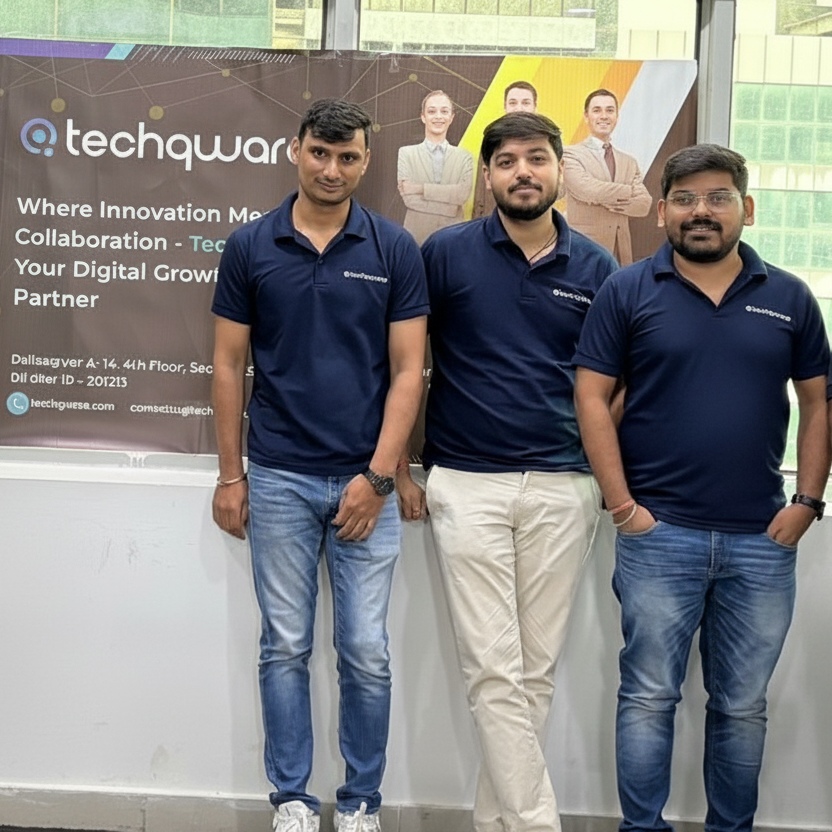
TechQware’s Mobile App Development Team
About Author
TechQware specializes in full-stack Mobile App Development, utilizing Swift for native iOS and Kotlin for native Android. For cross-platform solutions, we rely on Dart (Flutter) and JavaScript (React Native). Python is a foundational technology, powering the backend, RESTful APIs, and advanced Machine Learning features.