app development
From Idea to Launch: Everything You Need to Know About Travel App Development
 TechQware’s Mobile App Development Team
June 26, 2026
 TechQware’s Mobile App Development Team
June 26, 2026
In 2026, the travel sector is considerably more digital than it has ever been. Travelers today are reliant on mobile apps to plan, book and enhance their trips. A well designed and feature-rich travel app can enhance the experience of your users, encourage engagement, and create new revenue opportunities for the business. Statista (2024) reported that more than 700 million travelers utilize some form of travel app to enhance their trip each year globally, with the projected annual number increasing to 1.2 billion by 2026.
The travel application sector has quickly grown due to the increased prevalence of smartphones, the ease of digital payments, and user demand for a personalized experience. Travelers expect to book flights, hotels, or create itineraries with a mobile experience that is quick, intuitive, and reliable. For company owners, a travel app increases the visibility of their brand to customers, while providing efficiencies and insights into consumer behavior.
This guide is geared to take you through the phase of conception to launch. The guide covers important features of travel apps, travel app development, cost considerations, UX/UI principles, travel app trends, security and case studies. This guide serves as the road map for the successful building of a travel app, whether you are a startup, a Online Travel Agency(OTA) or a travel-focused business, or a travel-focused enterprise, this guide crafted by an experienced travel app development company serves as a comprehensive roadmap for building a successful travel app.
Already have an app concept? Let us audit your idea against the top 2026 travel app trends.
Developing a travel application represents the entire process of designing, developing, and deploying travel mobile applications. Travel applications use real-time booking systems, AI personalization, map applications, payment gateways, and analytics to provide users with an uninterrupted travel experience and journey planning.
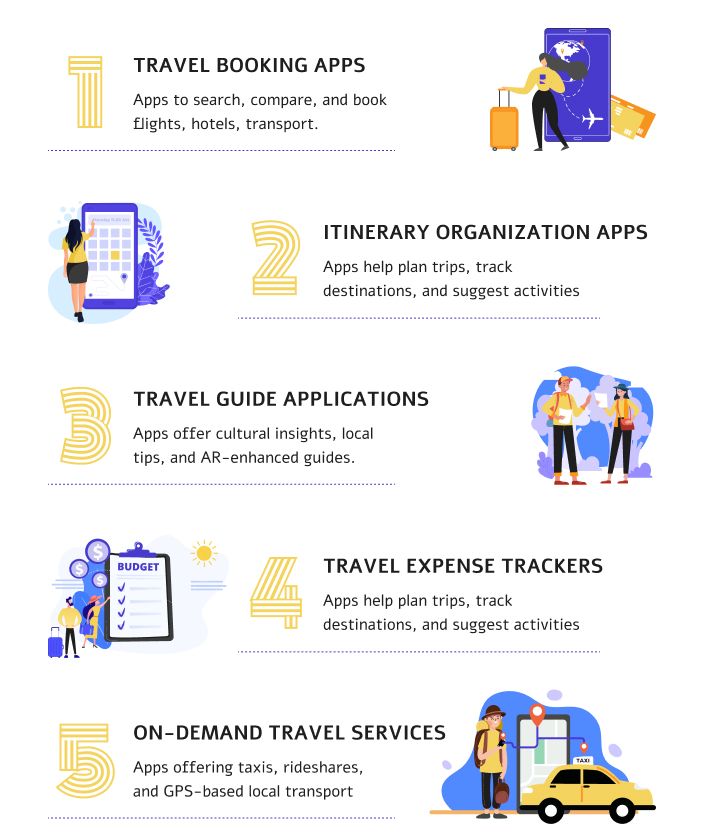
The success of a travel application is primarily based upon its features and user experience. Below are the core elements of a successful travel app.
Good searching and filtering capabilities for flights, hotels, buses, and rental cars is very important. The searching engine should be fast, easy to use, and allow a number of features to be filtered including price, distance from something, rating, and amenities.
AI can assess user behavior, preferences, and past trips and offer personalized information. This may be suggested to the user as new travel locations, specials available in the area, or appropriate activities to do.
Integration with maps and GPS ensures users can navigate unfamiliar cities, locate nearby attractions, and plan routes efficiently.
Travelers often face connectivity issues. Offering offline access to itineraries, maps, and bookings is a must for enhanced usability.
Secure payments via cards, wallets, UPI, or PayPal with support for multiple currencies increase accessibility for global users.
Feedback and ratings from users are a great way to establish trust and engagement, especially for hotels and local experiences.
Real time notifications for any flight statuses, offers or price drops, weather, or travel notifications improve user retention and engagement.
Security features like encryption, secure log-in, two-factor verification, and compliance with regulations such as GDPR help protect sensitive user information.
For B2B SaaS travel apps, an admin dashboard can provide insights into user behavior and booking patterns, and revenue analytics to optimize the business model.
Creating a travel app requires a multi-step process that ensures the alignment of user needs and business objectives.
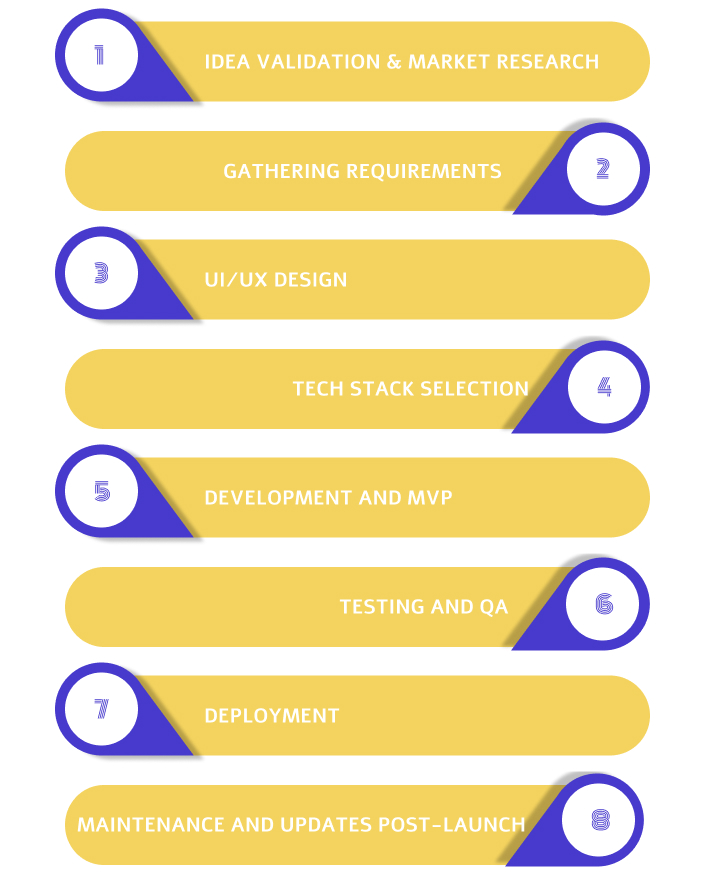
Prior to making any investment in your travel application, review competitor apps, assess unmet pre-established needs, and talk to potential users about their thoughts on your idea. Recently, niche apps, such as those for eco-travelers, solo travelers, etc. are trending.
You will want to determine the features and functionality of your travel application and what stack of technology you will use to build it. Additionally, you will need to determine if the travel application needs to be available for Android, iOS, or both. It is also common practice to develop user personas to help you define the user requirements.
Another important stage in the development of a travel app will be the developing of wireframes and prototypes that help you visualize the flow of the mobile application. During the design phase, it is important to keep the design simple, easy to navigate, and emotional. Also, ensure you use a consistent font and color palette along with branding throughout the travel application.
Typical stack:
Frontend: Flutter, React Native, or Swift/Kotlin for native apps.
Backend: Node.js, Python (Django), Ruby on Rails.
Database: PostgreSQL, MongoDB.
Cloud and hosting: AWS, Google Cloud, or Azure.
APIs: Amadeus, Skyscanner, Google Maps, Stripe for payments.
Start with an MVP that has the essential features. You will get early feedback as well as lower development risk.
Testing for functionality, performance, usability, and security. Testing across devices and testing on different platforms to ensure consistent details work across all platforms.
Publish the app on the Google Play Store and the Apple App Store. The app must comply with any app store rules and app metadata must be optimized.
Capture feedback and release regular updates, which could include features such as dynamic pricing, seasonal promotions, and overwrite personalization using AI in later releases to sustain business growth.
Turn user feedback into impactful features from pricing strategies to AI-based personalization that keep your business scaling.

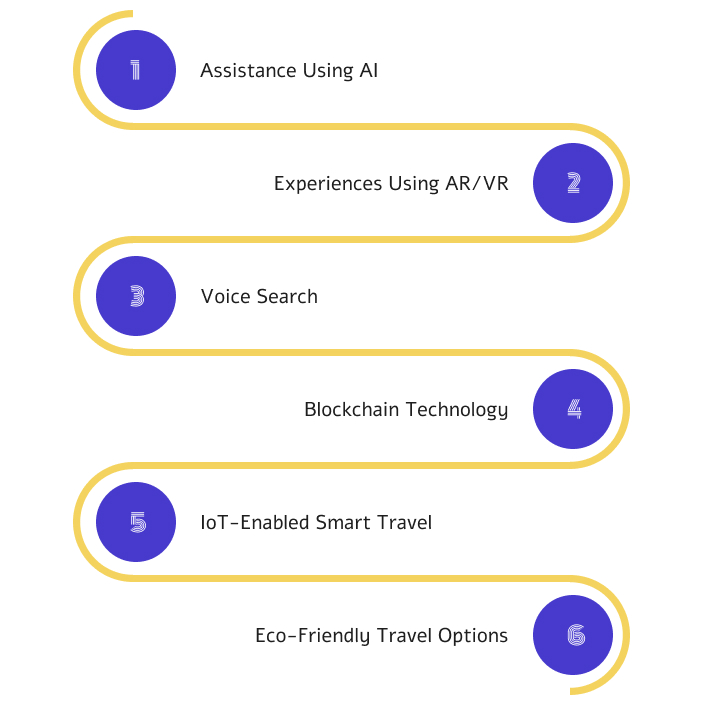
All of these trends enhance user experience and position your app strategically on the market vis a vis competitors.
Due to the sensitivity of the personal and payment information collected by travel apps, security is non-negotiable:
Per IBM Security Report (2024), data breaches now cost businesses an average of $4.45 million per breach, underscoring the necessity of robust security.
These examples reflect how newness, usability and personalization engaging concepts can create successful travel apps.
Cost varies by features, platforms, integrations and area.
According to Clutch (2025), average hourly rates run between $20-150 per hour depending on the location of the developer.
Stop researching prices and start planning. Book a free consultation to define your features, tech stack, and a precise cost estimate for your project.
Creating a travel app in the year 2026 involves thoughtful planning, effective use of technology, and a user-centric approach. The travel industry is advancing towards app-based digital experiences, and it is the most user-forged interaction with services.
For traveling businesses that wish to benefit from this model, TechQware Technologies offers fully managed Travel App Development Services, providing scalable, secure, and engaging solutions.
Talking about your travel app journey can begin today with TechQware - contact us for opportunity to develop a working prototype of the app.
Ans - $15,000 – $120,000 depending on features, platform, and region.
Ans - 10–12 weeks for MVP, 5–7 months for a full-featured app.
Ans - Flutter or React Native (mobile), Node.js/Python (backend), PostgreSQL/MongoDB (database).
Ans - By enabling predictive recommendations, chatbots, dynamic pricing, and personalized itineraries.
Ans - A combination of intuitive design, fast performance, personalization, trustworthiness, and real-time updates.
Let’s chat about your goals and explore how TechQware can support your journey ahead.


app development . Sep 28, 2026
Building CBUAE-Compliant Fintech Apps i…
app development . Sep 25, 2026
Digital Wallet Integration for Mobile A…